
I didn’t expect to find my new bedtime routine in a video game, but new indie release Pencil Stories has completely earned that spot.
I played it across a few nights just before bed, and by the time I finished each session I was ready to put it down and drift off. It didn’t hype me up or pose any sort of challenge; it did the opposite… and that’s why it worked so well.
What Pencil Stories is about
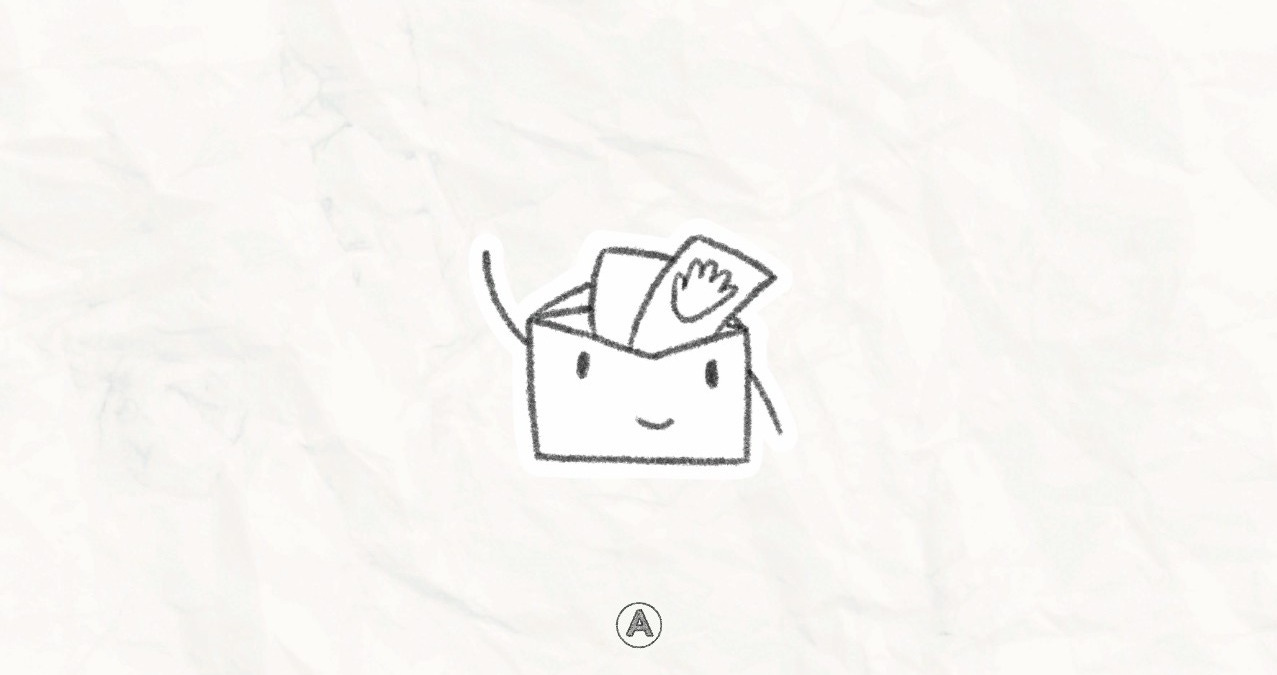
Pencil Stories is a short narrative exploration game set entirely at night in the village of Tsukinoma. You play as Letty, a small (and adorable) drifting letter who works the night shift, delivering mail while the rest of the village sleeps.
Each “day” begins at midnight. You explore the village, find hidden mailboxes, solve little riddles, and piece together the lives of the residents through letters and small environmental details.
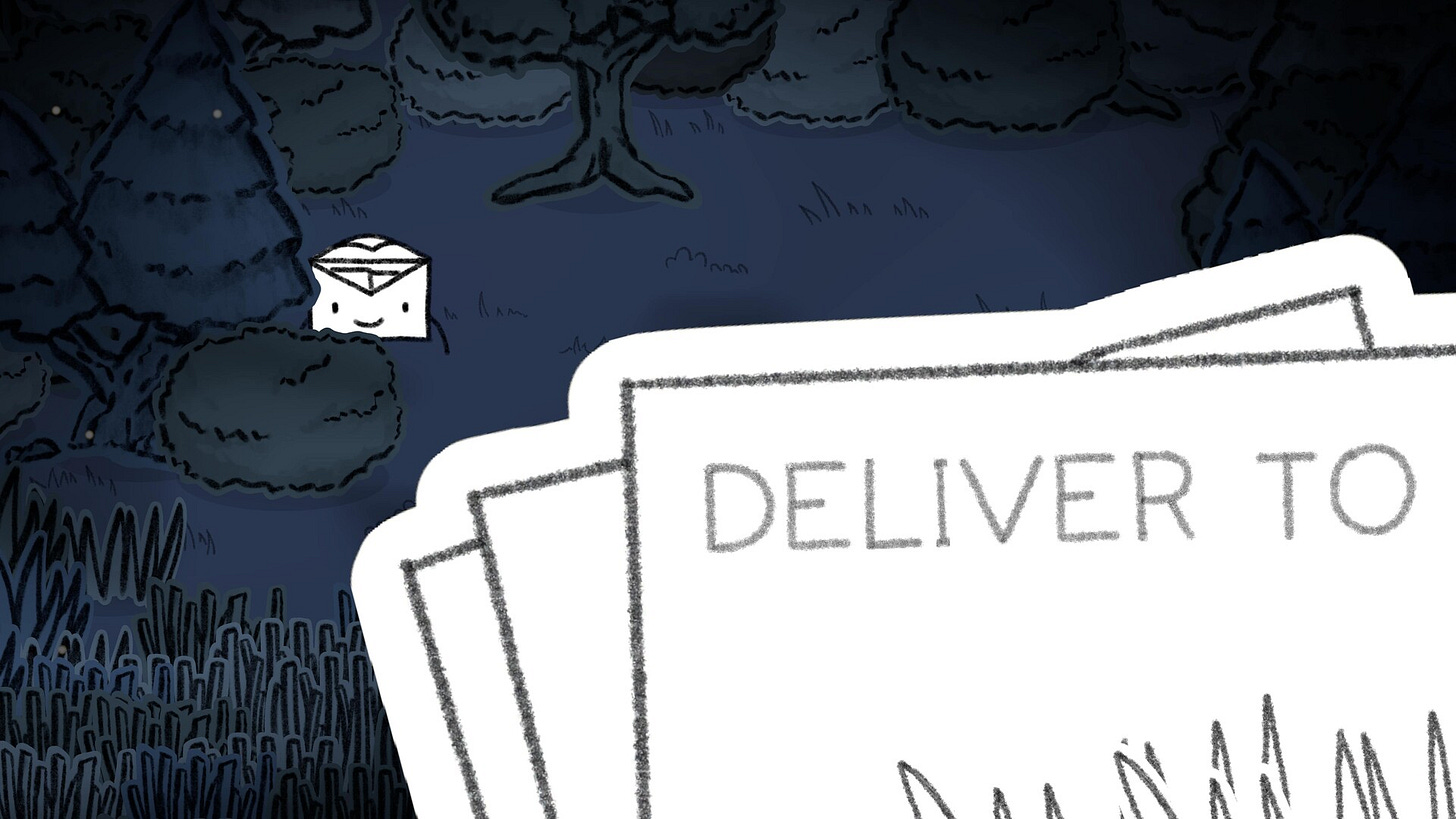
A game that exists entirely at night
One of the things I loved most is that Pencil Stories never leaves the night time. Every delivery and interaction with Letty happens after midnight, with the feeling that everyone else has already settled in for the night.
It’s just you and Letty, moving through the village at her (quite slow) pace, delivering letters while the village sleeps. That design choice alone makes the game feel immediately different from most cosy titles, and it’s a big part of why it worked so well for me as a bedtime game.
Music, sound, and switching off
The music is consistently peaceful and understated. What really stood out for me was the ambient sound design. Rain falling, trees and grass moving, water flowing through the river – these sounds are present throughout the game and form a constant background layer.
Played with headphones in bed, it was incredibly effective at helping my body relax, even when my mind was tired but restless.
Movement and exploration
It’s important to know that Letty moves slowly, and the game is very deliberate about that. When you move her around the screen, she lights up her surroundings. As the light spreads, it drifts across the screen in a way that felt to me like watercolour paint moving across paper.
I spent a lot of time simply moving Letty around without any objective, especially when entering a new part of the village. Watching areas light up and noticing small details in the artwork became part of the experience for me. It encouraged exploration for its own sake, not because the game asked me to.

Everything is hand-drawn, and the visual consistency across the village makes it easy to settle into.
The stories of Tsukinoma’s residents
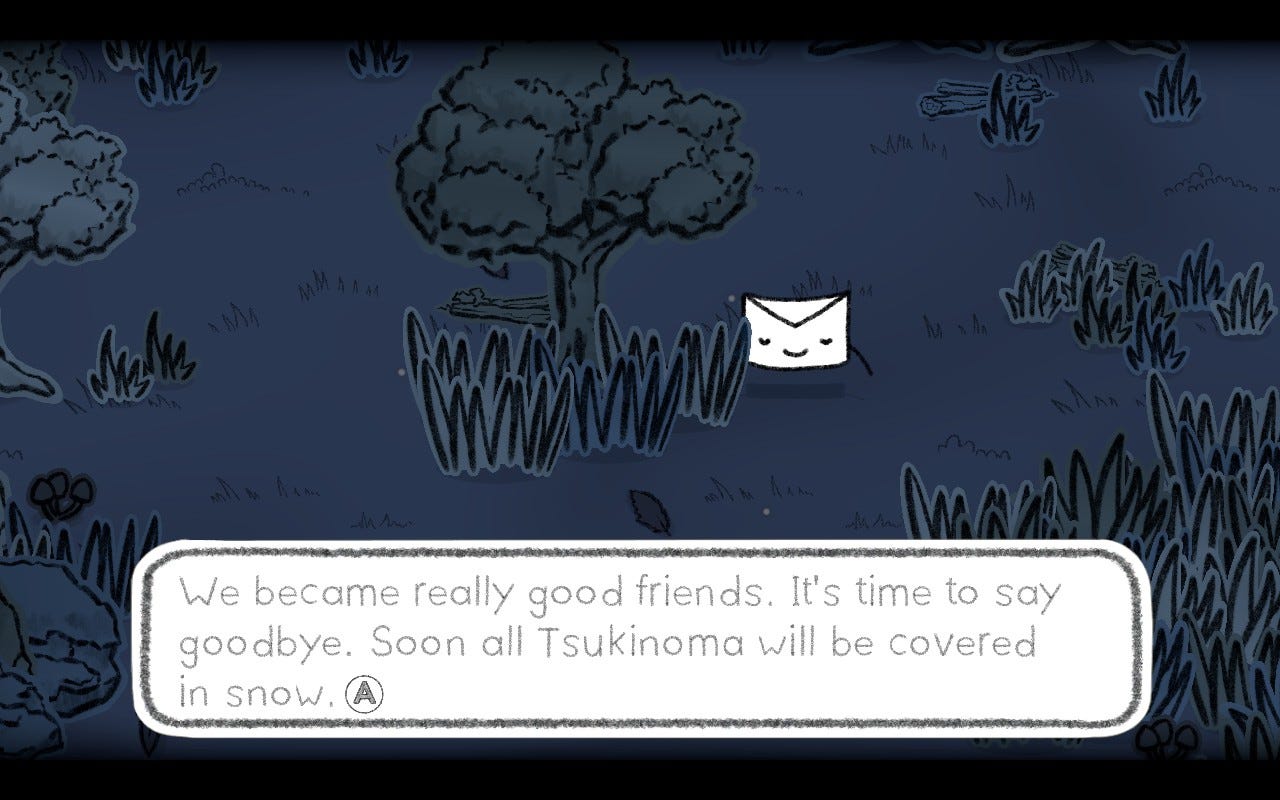
Although the village is empty at night, the people who live there slowly come into focus through letters and small story threads. As the season moves into winter, you follow along with their lives in a way that feels grounded.
I found myself genuinely invested in these stories, especially Mr. Snail, who quickly became my favourite character. These moments gave emotional context to the deliveries without turning the game into something narrative-heavy or dramatic.
Puzzles, structure, and repetition
The game unfolds over roughly 52 short nights, combining exploration with small riddles. The puzzles are accessible and rarely complex, although a few did have me scratching my head. In some cases, I found myself stumbling across the solution by chance rather than fully understanding what the riddle was asking or what the intended logic behind it was.
Most of the challenge comes from paying attention to your surroundings and remembering where things are, rather than solving anything abstract. I would have liked a little more clarity or explanation around some of the riddles, especially as the game leans so heavily on observation and interpretation.
Some nights involve backtracking, retracing steps, or picking up misplaced items. Structurally, this can feel repetitive; but honestly, for a game played at bedtime, I didn’t see that as a negative. The repetition helped establish a rhythm, which suited the overall experience.
A note on localisation
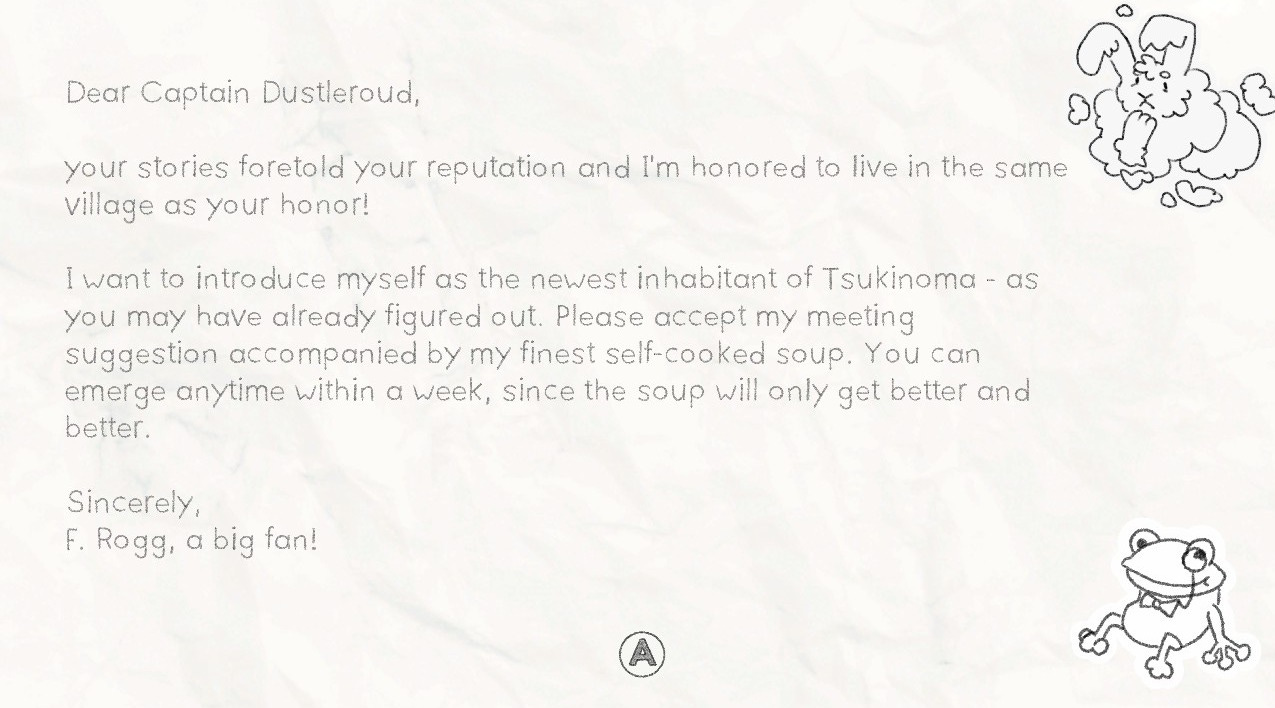
My only issue with Pencil Stories is the English translation. The localisation needs work. Some clues were harder to interpret than they should have been due to unnatural phrasing, and this carried across into the letters the characters write to each other.
In places, the English didn’t quite make sense, which is frustrating in a game so focused on reading and interpretation. Stronger localisation would significantly improve the clarity and flow.
I also ran into a couple of minor technical issues, such as clipping through objects and needing to reset my position via the menu. These were infrequent, but noticeable.
Pencil Stories: a game made for switching off
Pencil Stories knows exactly what it is. It’s not a game about challenge, speed, or big narrative twists. Its main focus is atmosphere, routine, and giving your brain space to slow down – especially at the end of the day.
If you’re looking for a game to play at bedtime, something visually calming, easy to return to, and genuinely effective at helping you wind down, this is one I’d strongly recommend. It’s rare for a game to slot so neatly into the end of the day, but Pencil Stories did exactly that for me.
Pencil Stories rating: 7/10

Leave a Reply