
There’s a study doing the rounds at the moment that I haven’t been able to stop thinking about. Playing Forever: Exploring the World of Older Women Video Game Streamers takes an academic look at something most of us in the older women gamers corner of the internet have been witnessing for a while now: women well past the supposed “gamer age” are streaming, building communities, and thriving. And if you’ve read my post on the average gamer age now being 41, none of this will come as a surprise.
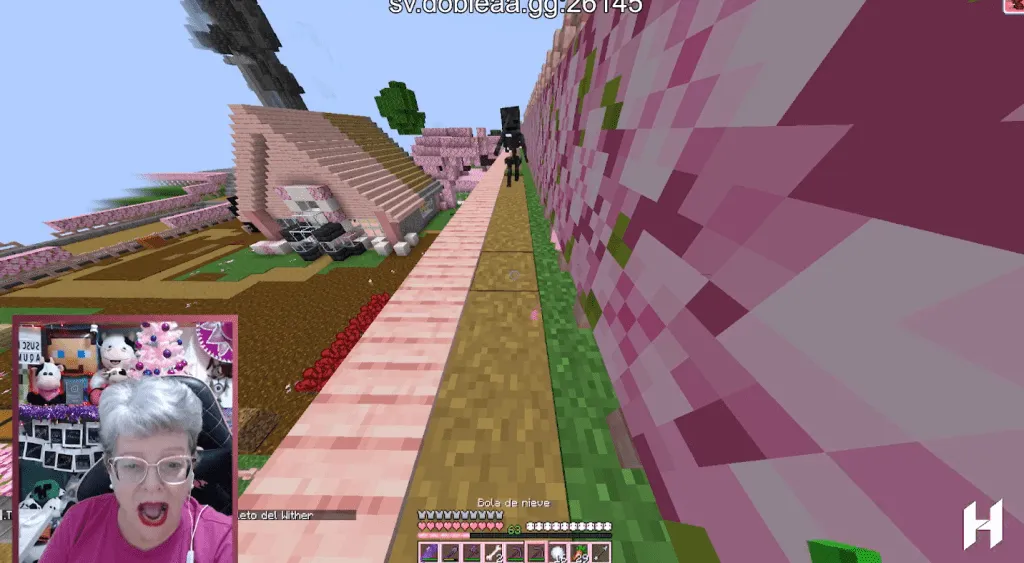
The study focuses largely on a case study of Fanny Buelmo, known as Aqumadre on Twitch, a 64-year-old Uruguayan streamer who plays Minecraft and Rust and has built a following of around 72,000 people to date.
The “Wrong” Kind of Gamer
I don’t need to tell you (if you’re reading Cosy Gaming Over 40, you already know) that gaming has spent decades telling certain people they don’t belong. The marketing, the culture: so much of it was built for young men, and everyone else was either ignored or actively made to feel unwelcome. Women were decorative at best, and older women were essentially invisible.
What strikes me about the research is that it puts proper academic language around something I’ve felt instinctively for a while now: that when you don’t see yourself reflected in a culture, it’s not just discouraging, it actually limits your ability to articulate your own experience. The paper calls this hermeneutical injustice, which is a mouthful, but the idea is simple really. If there are no frameworks or narratives for an “older woman who games,” it becomes harder for older women who game to understand and express what they’re doing and why it matters.
Aqumadre, just by existing and streaming, is filling in one of those gaps.
Forget the Leaderboard. She’s Building Something Better
One of the things the study highlights that I found most refreshing is that older women streamers aren’t trying to compete on traditional gaming terms. They’re not chasing clip-worthy moments or leaderboard positions. The communities they build are centred on emotional connection and a sense of belonging.
Aqumadre’s chat is also genuinely affectionate. People look out for her. They’re protective. She uses humour and vulnerability in equal measure, and her followers respond to that rather than to any measure of technical skill.
There’s something the research describes as being a “freedom fighter”; simply refusing to play by rules that were never designed for you. Not adopting the persona the platform expects, not pretending to be younger, louder, or more competitive.
But Let’s Not Make Her the Community Nan Just Yet…
To its credit, the study doesn’t just celebrate this phenomenon uncritically, and neither should we. There’s an interesting tension it identifies in how younger audiences engage with older women gamers and streamers. A lot of viewers position themselves as helpers or guides who explain the game and offer tips. Which is lovely on the surface, but the research points out that this can subtly reinforce the idea of older women as dependent or passive. The “grandmother figure” is warm and comforting, yes. But she’s also, in that framing, someone who needs looking after.
That is worth dwelling on, because there’s a difference between a community that values an older woman’s perspective and a community that loves having a surrogate nan to protect.
Every Time We Show Up, We Change the Landscape
I’ve recently started streaming (find me on Twitch here: PixelsAndChai), but I also think the findings resonate well beyond Twitch. The study’s broader point is that older women’s participation in gaming challenges what gaming is for and who it’s by, through the accumulation of ordinary presence.
Every time someone like Aqumadre, or, in a smaller way, someone like me writing a review of a cosy farming game at half eleven on a Tuesday, simply occupies space in gaming culture, the definition of “gamer” gets a little more elastic. And if you need any more convincing that older women gamers belong here, science increasingly agrees that gaming is good for us too.
The paper notes that the industry itself needs to reflect on its design, development, and marketing practices in response to this. I’m not holding my breath on that front, frankly. But the cultural shift does feel real. I see it in the communities I’m part of, and I see it in the fact that a study like this exists at all.

Have you come across any older women streamers worth following? I’d love to build a little list! Drop your recommendations in the comments.

Leave a Reply